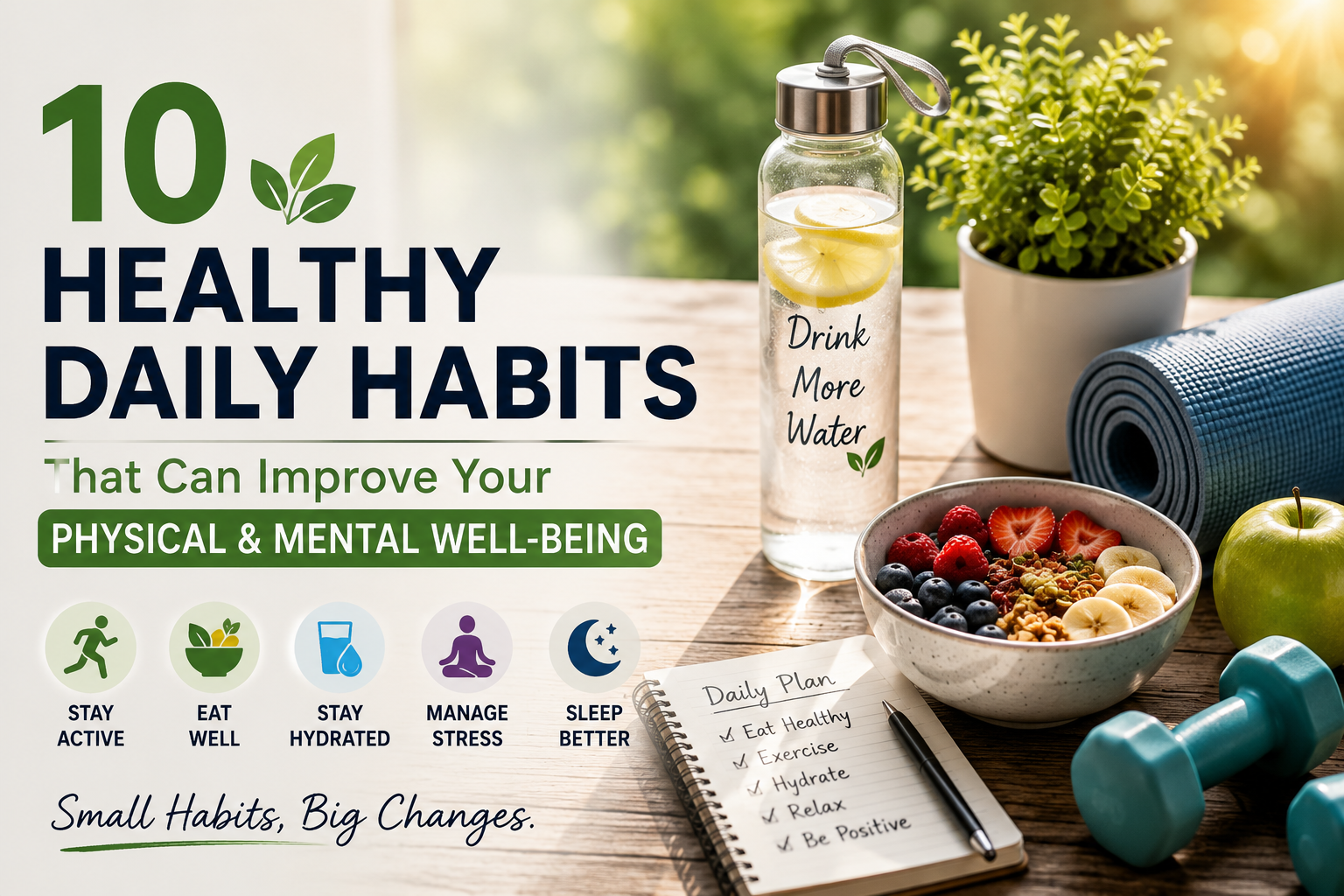
10 Healthy Daily Habits That Can Improve Your Physical and Mental Well-Being
Living a healthy life doesn’t require drastic changes or expensive fitness programs. Often, it’s the small, consistent habits that have the greatest impact on your overall well-being. By making simple adjustments to your daily routine, you can improve your physical health, strengthen your mental resilience, and enjoy a more balanced lifestyle.
Whether you’re looking to increase your energy, reduce stress, or simply feel your best, these ten healthy daily habits can help you achieve your goals.
Why Healthy Habits Matter
Healthy habits create a strong foundation for long-term wellness. They influence everything from your energy levels and productivity to your immune system and emotional health.
Benefits of healthy daily habits include:
- Improved physical fitness
- Better mental health
- Increased productivity
- Stronger immune system
- Better sleep quality
- Reduced risk of chronic diseases
- Higher overall quality of life
The key is consistency rather than perfection.
1. Start Your Day with a Healthy Breakfast
A nutritious breakfast provides your body with the energy it needs to begin the day. Choose foods rich in protein, fiber, and healthy fats, such as:
- Oatmeal
- Eggs
- Fresh fruit
- Greek yogurt
- Whole-grain toast
- Nuts and seeds
A balanced breakfast helps improve concentration and reduces unhealthy snacking later in the day.
2. Stay Hydrated
Water is essential for nearly every function in the human body.
Proper hydration helps:
- Maintain energy levels
- Improve digestion
- Support brain function
- Regulate body temperature
- Keep your skin healthy
Aim to drink enough water throughout the day, especially during hot weather or physical activity.
3. Exercise Regularly
You don’t need to spend hours at the gym to stay active.
Simple activities include:
- Walking
- Cycling
- Stretching
- Swimming
- Yoga
- Strength training
Experts recommend at least 150 minutes of moderate physical activity each week.
4. Eat More Fruits and Vegetables
Fruits and vegetables are rich in vitamins, minerals, antioxidants, and fiber.
Try to include a variety of colorful produce in your meals to support heart health, digestion, and immunity.
5. Get Quality Sleep
Sleep is one of the most important components of good health.
Adults generally benefit from 7–9 hours of quality sleep each night. Good sleep supports:
- Memory
- Learning
- Mood
- Immune function
- Heart health
Create a relaxing bedtime routine and avoid excessive screen time before sleeping.
6. Manage Stress Effectively
Everyone experiences stress, but managing it well can improve both mental and physical health.
Healthy stress-management techniques include:
- Deep breathing
- Meditation
- Reading
- Spending time outdoors
- Talking with friends or family
- Practicing gratitude
Even a few minutes of mindfulness each day can make a positive difference.
7. Limit Processed Foods
Highly processed foods often contain excessive amounts of sugar, sodium, and unhealthy fats.
Instead, choose:
- Whole grains
- Lean proteins
- Fresh vegetables
- Fruits
- Healthy fats
- Homemade meals
Small dietary improvements can lead to long-term health benefits.
8. Reduce Screen Time
Many people spend several hours each day looking at digital screens.
Taking regular breaks helps reduce:
- Eye strain
- Neck pain
- Fatigue
- Poor posture
Follow the 20-20-20 rule: Every 20 minutes, look at something about 20 feet away for at least 20 seconds.
9. Build Positive Relationships
Strong social connections contribute to emotional well-being.
Spend quality time with:
- Family
- Friends
- Colleagues
- Community groups
Healthy relationships provide emotional support and improve overall happiness.
10. Keep Learning New Skills
Lifelong learning keeps your mind active and adaptable.
You can:
- Read books
- Take online courses
- Learn a new language
- Develop creative hobbies
- Explore new technologies
Continuous learning supports brain health and personal growth.
Creating Healthy Habits That Last
Building healthy habits takes time. Start with one or two changes instead of trying to transform your entire lifestyle overnight.
Tips for success:
- Set realistic goals.
- Track your progress.
- Celebrate small achievements.
- Stay consistent.
- Be patient with yourself.
Remember that lasting change comes from daily practice, not temporary motivation.
Frequently Asked Questions
What are the most important healthy daily habits?
Some of the most effective habits include eating a balanced diet, staying hydrated, exercising regularly, getting enough sleep, and managing stress.
How long does it take to build a new habit?
While everyone is different, research suggests that forming a lasting habit can take several weeks or even months, depending on the behavior and consistency.
Can small habits really improve health?
Yes. Small, consistent improvements often produce significant long-term benefits for both physical and mental well-being.
Why is sleep important for health?
Sleep allows your body and brain to recover, improves memory, strengthens the immune system, and supports emotional health.
How can I stay motivated to maintain healthy habits?
Set achievable goals, monitor your progress, reward yourself for milestones, and focus on gradual improvement rather than perfection.
Final Thoughts
Healthy living isn’t about following strict rules or making dramatic changes overnight. It’s about making thoughtful choices every day that support your body and mind. By incorporating simple habits like staying active, eating nutritious foods, getting enough sleep, and managing stress, you can create a healthier and more fulfilling lifestyle.
Start with one habit today. Small steps, practiced consistently, can lead to meaningful improvements in your health and happiness over time.
