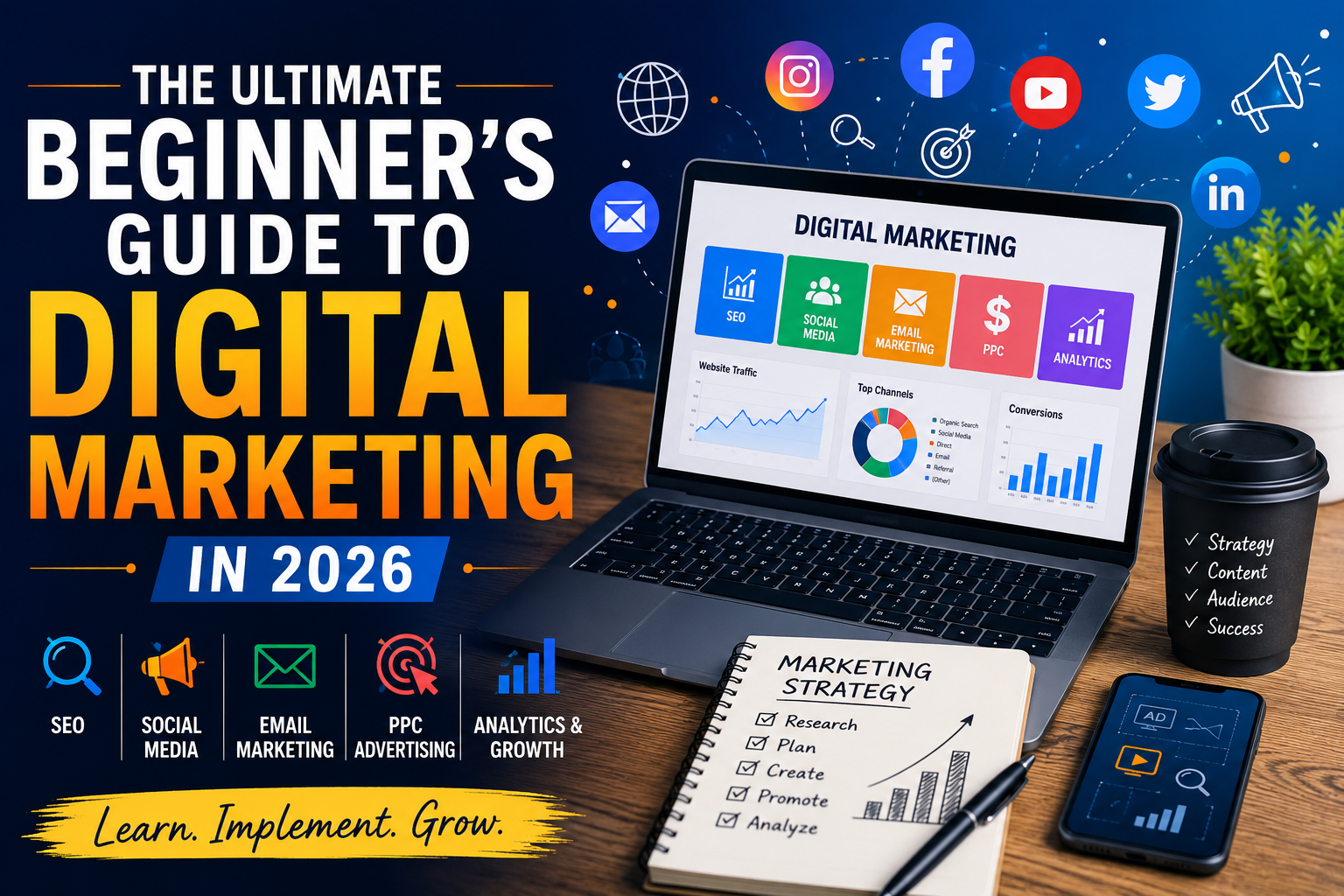
In today’s digital-first world, having an online presence is no longer optional—it’s essential. Whether you’re a small business owner, entrepreneur, freelancer, or aspiring marketer, understanding digital marketing can help you reach more people, generate leads, and grow your brand.
Digital marketing combines various online strategies to connect businesses with their target audience. From search engines and social media to email campaigns and paid advertising, every channel plays a unique role in building visibility and driving results.
This beginner-friendly guide explains the fundamentals of digital marketing and how you can use it effectively in 2026.
What Is Digital Marketing?
Digital marketing is the promotion of products, services, or brands using digital channels such as:
- Search engines
- Websites
- Social media platforms
- Mobile applications
- Online advertising
- Content marketing
Unlike traditional marketing, digital marketing allows businesses to measure performance, target specific audiences, and optimize campaigns in real time.
Why Digital Marketing Matters
Consumers spend a significant portion of their time online. Businesses that invest in digital marketing gain opportunities to:
- Reach global audiences
- Build brand awareness
- Increase website traffic
- Generate qualified leads
- Improve customer engagement
- Boost online sales
- Measure marketing performance accurately
Digital marketing is cost-effective and scalable for businesses of all sizes.
Key Components of Digital Marketing
1. Search Engine Optimization (SEO)
SEO improves your website’s visibility on search engines by optimizing content, website structure, and user experience.
Benefits include:
- Higher search rankings
- Organic website traffic
- Improved credibility
- Long-term online visibility
Focus on high-quality content, keyword research, fast-loading pages, and mobile-friendly design.
2. Content Marketing
Content marketing involves creating valuable information that educates, entertains, or solves problems for your audience.
Examples include:
- Blog posts
- Videos
- Infographics
- Case studies
- Podcasts
- Guides
- Newsletters
Quality content builds trust and supports SEO efforts.
3. Social Media Marketing
Social media platforms help businesses connect directly with customers.
Popular platforms include:
- X (formerly Twitter)
- YouTube
- TikTok
Consistent posting and audience engagement help strengthen brand recognition.
4. Email Marketing
Email remains one of the highest-return digital marketing channels.
Businesses use email to:
- Share updates
- Promote products
- Send newsletters
- Welcome new customers
- Recover abandoned carts
- Build long-term relationships
Personalized emails generally perform better than generic campaigns.
5. Pay-Per-Click (PPC) Advertising
PPC allows businesses to display advertisements on search engines and websites while paying only when users click.
Advantages include:
- Immediate visibility
- Targeted audiences
- Measurable performance
- Flexible budgets
Well-managed PPC campaigns complement organic SEO strategies.
6. Analytics and Performance Tracking
Successful marketing relies on data.
Track important metrics such as:
- Website visitors
- Conversion rate
- Bounce rate
- Click-through rate (CTR)
- Customer acquisition cost
- Return on investment (ROI)
Regular analysis helps improve future marketing decisions.
Digital Marketing Trends in 2026
The digital landscape continues to evolve rapidly. Some of the most important trends include:
- AI-powered marketing tools
- Voice search optimization
- Video-first content
- Personalized customer experiences
- Privacy-focused marketing
- Influencer collaborations
- Interactive content
- Automation and chatbots
Businesses that embrace these trends can stay competitive in a changing marketplace.
Common Mistakes Beginners Should Avoid
Many beginners struggle because they:
- Ignore SEO fundamentals
- Publish inconsistent content
- Target the wrong audience
- Neglect mobile optimization
- Skip performance tracking
- Focus only on selling instead of providing value
- Fail to build trust with customers
Avoiding these mistakes leads to stronger long-term results.
How to Create a Simple Digital Marketing Strategy
Follow these basic steps:
- Define your goals.
- Identify your target audience.
- Build a professional website.
- Perform keyword research.
- Publish valuable content regularly.
- Optimize for search engines.
- Promote content on social media.
- Build an email list.
- Analyze your results.
- Continuously improve your strategy.
Consistency is more important than perfection.
Frequently Asked Questions
What is digital marketing?
Digital marketing is the practice of promoting businesses, products, or services using online platforms such as search engines, social media, email, and websites.
Is digital marketing good for small businesses?
Yes. Digital marketing offers affordable ways for small businesses to reach customers, build brand awareness, and compete with larger companies.
What is the difference between SEO and PPC?
SEO focuses on earning organic search traffic over time, while PPC uses paid advertisements to generate immediate visibility.
How long does SEO take?
SEO is a long-term strategy. Depending on competition and content quality, noticeable improvements often take several months.
Which digital marketing channel is best?
The best channel depends on your goals, audience, and industry. Many successful businesses combine SEO, content marketing, social media, and email marketing for the best results.
Final Thoughts
Digital marketing continues to be one of the most powerful tools for businesses and professionals seeking sustainable online growth. By understanding the core principles of SEO, content marketing, social media, email marketing, and analytics, beginners can build a strong foundation for long-term success.
The digital landscape will continue to evolve, but one principle remains constant: businesses that consistently provide value, understand their audience, and adapt to new technologies will always have a competitive advantage.
